

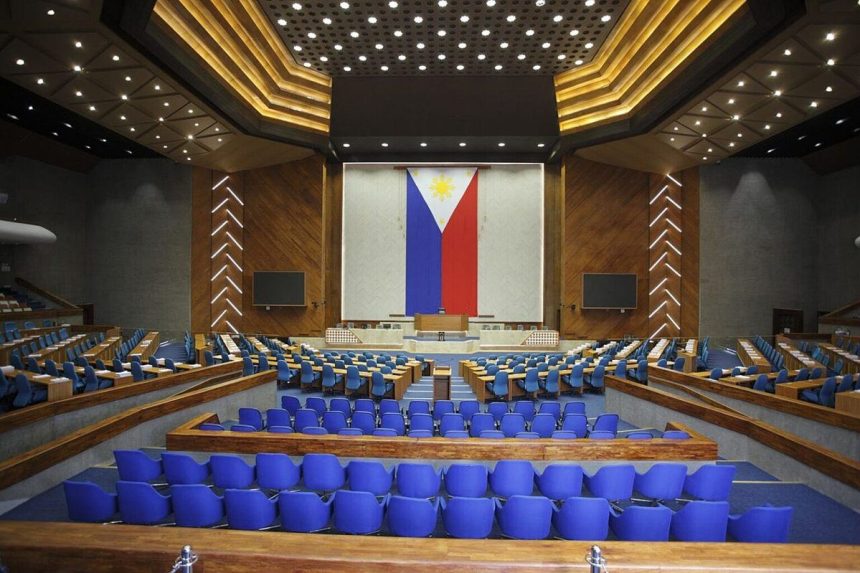
Facts PH reported on October 26 that budget watchdogs had flagged more than P1 trillion of the proposed 2027 budget as vulnerable to patronage. Since then, the dispute has moved from totals to names. A watchdog list has placed House Majority Leader Sandro Marcos, the President’s son, at the top of district-level public works additions, the Palace has defended insertions in principle, and 35 business groups have asked Congress to strip out additions that lack technical justification.
What the list shows
The People’s Budget Coalition (PBC) told the Senate finance committee that the House-approved bill added about 7,000 infrastructure projects worth some P190 billion. Its list of Department of Public Works and Highways (DPWH) additions ranked the first district of Ilocos Norte, represented by Marcos, first, with 405 projects worth P4.37 billion.
The list also names other House leaders. Speaker Faustino Dy III’s Isabela district ranked fourth, with 147 projects worth P1.68 billion, shared with the province’s fourth district. Appropriations committee chair Mikaela Suansing’s Nueva Ecija district ranked seventh, with 107 projects worth P1.35 billion, shared with the province’s second district. Batangas Rep. Gerville Luistro, the lead impeachment prosecutor, ranked eighth, with 77 projects worth P1.31 billion, shared with another district.
Two caveats matter. The coalition based its figures on budgets allocated to DPWH district offices, not to individual lawmakers. And it said the figures are not evidence of wrongdoing. The list shows where the money would go, not who asked for it or whether any project is improper.
The Palace response
Asked about the Marcos district at a briefing in Cagayan de Oro on October 27, Palace press officer Claire Castro said an insertion “is not inherently bad.” She said it becomes a problem when funds end up in a politician’s pocket, and that there should be no ghost projects or substandard materials.
Facts PH found no public response from Rep. Marcos, Speaker Dy, Rep. Suansing or Rep. Luistro to the coalition’s list in the coverage reviewed. In February, Marcos said the executive, not the legislature, decides funding for district projects, the Manila Bulletin reported.
The business groups’ demands
On October 29, 35 business groups, including the Makati Business Club, the Management Association of the Philippines and the Financial Executives Institute of the Philippines, wrote to the leaders of both chambers. They said the House added more than P180 billion to the DPWH budget through its amendments subcommittee, covering at least 6,000 projects, many of them lump sums for multi-purpose buildings and access roads.
They said the additions were funded partly by cuts of about P130 billion to foreign-assisted projects, P9.5 billion to calamity funds, P1.76 billion to the EDSA Busway and P4.9 billion to health programs. They asked Congress to remove items without a technical basis, restore those cuts unless publicly justified, publish every amendment with its proponent, and bar new items at the bicameral stage. “Our call is not for delay,” they wrote, adding that they oppose a reenacted budget.
The House’s case
House leaders reject the insertion label. Deputy Speaker Ronaldo Puno said on October 26 that the executive submitted public works items as lump sums, so Congress had to fill in the details. Appropriations vice chair Albert Garcia asked watchdogs to name specific projects so errors could be corrected.
Why the Supreme Court ruling does not settle it
The Supreme Court ruled this month that Congress cannot raise appropriations above what the President proposed. But the House bill keeps the total at about P7.2 trillion and, according to the business groups, funded its additions partly through cuts. The dispute is therefore about how money was moved within the total, which the ruling’s ceiling does not by itself address.
What to watch
Senate finance chair JV Ejercito and Senate President Gatchalian have committed to a line-by-line review and no last-minute insertions. The tests are concrete: whether the Senate publishes the House-added projects with their proponents, whether the cuts to foreign-assisted projects and calamity funds are restored, and whether the bicameral conference is opened to observers, as watchdogs have asked.