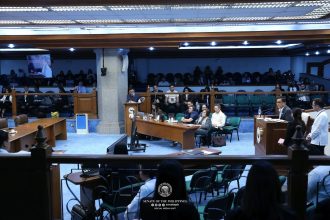

Vice President Sara Duterte’s defense has begun presenting the witnesses it says will answer allegations surrounding her Statements of Assets, Liabilities and Net Worth. After the first two, however, the central questions have not disappeared. If anything, the testimony has shown why the property records at the center of the impeachment case require clearer answers.
That is not the same as saying the witnesses proved Duterte made false declarations. They did not. Nor does uncertainty in a witness’s testimony establish unexplained wealth. The prosecution still carries the responsibility of proving the charge before the impeachment court.
But the defense chose these witnesses for a purpose: to demonstrate that properties prosecutors say were omitted or inconsistently declared can be reconciled with Duterte’s SALNs. On that narrower test, the opening two witnesses have so far fallen short of providing a clean explanation.
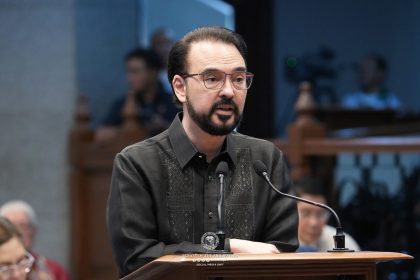
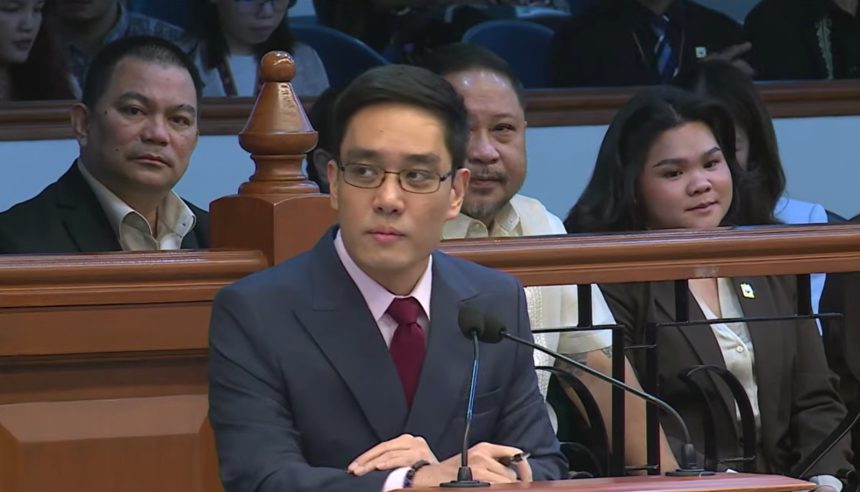
Davao City Assessor Jaime Adalin was called first to address a Matina property acquired by Duterte’s husband, Manases Carpio.
Adalin maintained that a property purchased for ₱6 million in 2024 was the same property listed in Duterte’s SALN with an acquisition cost of ₱10 million. He based that conclusion on tax declarations, assessed values and local property records.
That testimony gave the defense an argument. It did not eliminate the discrepancy.
The deed and electronic tax records showed a ₱6-million acquisition cost. The SALN showed ₱10 million. The records also differed in how the property was described. Prosecutors noted that one document referred to a lot with improvements, while the SALN described a residential lot. Senator-judges also questioned whether the records contained enough identifying information to establish conclusively that the documents referred to the same asset.
Adalin at one point said he was not certain whether the property shown to him was the same one in the SALN after being confronted with images of a commercial establishment at the site. He later said he had checked with his office and confirmed that it was.
The defense is entitled to argue that his final answer should carry the greater weight. But senator-judges are equally entitled to ask why a witness brought specifically to clarify the record required further checking before reaching that certainty.
His testimony about travel to China created a separate credibility problem.
Adalin initially struggled to recall a January trip before acknowledging it after questioning and reference to immigration records. Senator-judges became sufficiently concerned that the court later reminded witnesses that knowingly false testimony can result in contempt or perjury proceedings.
That episode does not prove anything about Duterte’s assets. It should not be treated as if it does. But credibility matters when a witness is being asked to reconcile records whose meaning is already disputed.
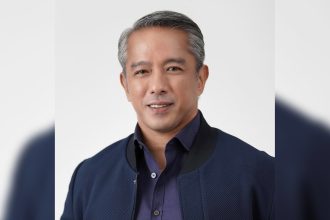
The second witness, Samal City Assessor John Kenneth Enumerables, presented a different problem. The defense called him to help establish that a Samal property owned by Carpio had already been declared in Duterte’s joint SALN.
Enumerables initially linked the property to the SALN using its market and assessed values. Under cross-examination, however, he acknowledged that he could not be certain that the titled property was the same property listed in the SALN because the SALN contained no title number.
That limitation is important, but it also requires context. Presiding Officer Francis Escudero noted that SALNs are not required to include title numbers. The absence of one therefore cannot itself be treated as evidence of concealment.
Still, another discrepancy remained. The deed showed an acquisition cost of about ₱3.45 million, while the SALN listed ₱4.04 million. Then came the location issue.
Duterte’s SALNs identified the property as being in Barangay Matanos. Enumerables testified that no such barangay exists in the Island Garden City of Samal and that city tax records place the property in Barangay San Isidro.
Again, there is a potential explanation. Earlier testimony from the Register of Deeds indicated that “Matanos” was carried over from an older mother title and, under land registration rules, continued to appear on later titles even though the current administrative location is San Isidro.
That explanation matters. A responsible assessment cannot simply say that the nonexistent barangay proves a false declaration. But it also illustrates the larger problem facing the defense.
The first two witnesses were supposed to make the documentary picture clearer. Instead, the court has heard competing property values, different descriptions, uncertain links between titles and SALN entries, and conflicting location records that require historical explanations.
There may ultimately be legitimate explanations for all of them.
The ₱6-million and ₱10-million figures may be reconciled. The Samal acquisition values may have an explanation. “Matanos” may indeed be nothing more than a legacy description inherited from an old title. Later witnesses and additional records may resolve questions the first two could not.
The defense case has only begun, and it would be premature to judge it on two witnesses.
But that cuts both ways. It is also premature for the defense to claim that the disputed properties have already been satisfactorily explained.
The most defensible conclusion after the first two witnesses is narrower: the defense has started presenting its explanation, but the documentary questions that brought these witnesses to the stand remain alive. For an impeachment case centered on whether a vice president accurately disclosed substantial assets, clarity is not a minor procedural matter. It is the issue.
The court should therefore insist on records that allow each disputed asset to be identified and reconciled without inference wherever possible. The prosecution must prove its allegations. The defense must be allowed to challenge them fully.
But public accountability is not served by accepting uncertainty from either side.
When the issue is whether the country’s second-highest official accurately disclosed her wealth, the standard should be straightforward: the records should explain the assets more clearly than the first two defense witnesses have managed to do.