
The Philippines is set to conclude its ASEAN chairship without finalizing a legally binding Code of Conduct for the South China Sea, although negotiations between the regional bloc and China have reached approximately 80% completion.
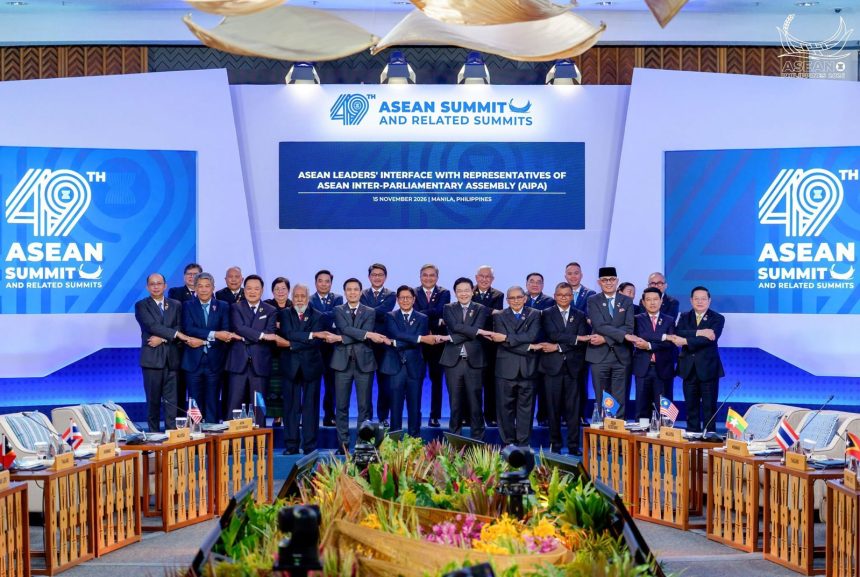
Foreign Affairs Secretary Ma. Theresa Lazaro said Sunday that negotiators had reached provisional agreement on about 80% of the draft’s paragraphs, but several major issues remain unresolved. The Philippines had aimed to conclude negotiations by the end of 2026. However, talks will now continue under Singapore, which assumes the ASEAN chairship in 2027. during the 49th ASEAN Summit in Manila, Lazaro told reporters:
We leave this almost 80-percent finished document to Singapore as the next chair.
Of the four major outstanding issues, negotiators have agreed on the relationship between the proposed code and the 2002 ASEAN-China Declaration on the Conduct of Parties in the South China Sea. Questions remain over the code’s geographical scope and whether its provisions will be legally binding.
The proposed agreement is intended to establish rules for managing maritime disputes and preventing confrontations in the South China Sea, where China and several Southeast Asian countries have overlapping claims.
Despite the unfinished negotiations, ASEAN leaders adopted several other regional measures during the summit. These included the ASEAN Declaration on Fair, Ethical and Sustainable Recruitment for Empowered Migrant Workers, aimed at strengthening protection against fraudulent recruitment and human trafficking.
Migrant Workers Secretary Hans Leo Cacdac said the declaration would benefit approximately 600,000 Filipino workers across ASEAN countries. The Department of Migrant Workers is also monitoring around 90 to 100 Filipinos allegedly trapped in online scam operations in Myanmar.
ASEAN also finalized a regional strategic framework for semiconductor supply chains, while its Digital Economy Framework Agreement was signed on Saturday, according to Finance Secretary Frederick Go.
Separately, Philippine officials held discussions with Brazil on expanding trade and investment cooperation, particularly in agriculture, food security, renewable energy, semiconductors and digital trade.
The Philippines is seeking greater access to the Brazilian market for agricultural and seafood products, while both countries are exploring opportunities to connect businesses across ASEAN and South America’s Mercosur trade bloc.