
Philippine business groups are urging the government to disclose the terms of its emerging trade arrangement with the United States, warning against replacing dependence on one supplier with exclusive reliance on another for food and energy.
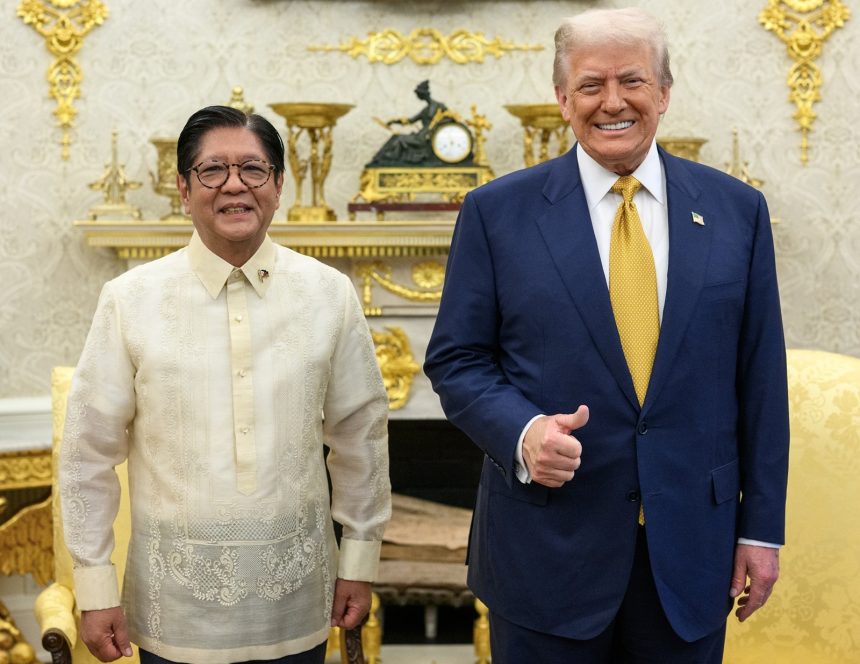
The calls follow conflicting descriptions of the arrangement from US President Donald Trump and President Ferdinand Marcos Jr.
Trump said the Philippines would begin sourcing 100% of its agricultural products and energy requirements from the United States on Jan. 1. Marcos later clarified that Manila’s objective was to diversify its suppliers, not depend exclusively on the US, and said negotiations were still underway.
Management Association of the Philippines President Donald Lim said stronger trade with Washington could benefit the country if it results in lower food and energy prices and better access for Philippine exporters. But he said any commitment to source all energy from one country would raise concerns.
Energy security requires diversification, competitive pricing and continued investment in domestic and renewable energy.
Lim said the government should clarify what Philippine exporters would receive in return, how additional agricultural imports could affect local farmers and whether cheaper US energy would actually lower electricity and operating costs.
Philippine Exporters Confederation President Sergio Ortiz-Luis Jr. also questioned whether the government could commit private companies to purchasing US goods regardless of price. He said Philippine buyers should not be forced to purchase more expensive products and called for improved US market access for local exports.
The Federation of Philippine Industries similarly urged reciprocity, arguing that increased US imports should be accompanied by better opportunities for Philippine products in the American market.
The Philippine Chamber of Commerce and Industry raised additional concerns about the potential effect of an exclusive US arrangement on the peso and import costs. PCCI Vice President Bryan Ang warned that sharply higher demand for dollars could put further pressure on the currency and raise domestic prices.
Malacañang, however, reiterated Sunday that the United States would be only one of several potential suppliers.
Palace Press Officer Claire Castro said the administration’s goal is to expand the number of sources available to the Philippines so it can obtain food and energy at competitive prices while reducing supply risks.
Senate President Sherwin Gatchalian also said price should determine where the Philippines buys fuel.
Gatchalian said US Treasury Secretary Scott Bessent had encouraged Manila to shift liquefied natural gas purchases from Qatar to the United States during President Trump’s recent visit. He said he responded that US LNG would have to be competitive after shipping costs are considered.
The White House’s own account of the Manila talks does not specify a 100% sourcing requirement. Its fact sheet says the Philippines committed to increasing imports of American agricultural and energy products as part of an effort to reduce the US trade deficit with the country.
The Philippine government has not announced purchase volumes, prices, implementation dates or an exclusive sourcing requirement. Energy Secretary Sharon Garin has said negotiations remain ongoing and that Manila will agree only to terms that benefit the Philippines and Filipino households.