
The dispute over whether Vice President Sara Duterte can be convicted by 14 or 16 senators has exposed a deeper problem that the Senate cannot afford to ignore. The Supreme Court will eventually have to decide the legal question before it: how the constitutional requirement of “two-thirds of all the Members of the Senate” should operate when some senator-judges are unable to participate in an impeachment trial.
But there is a separate institutional question that should not depend on that ruling. What happens when prolonged absence itself affects the number of votes needed to decide an impeachment case?
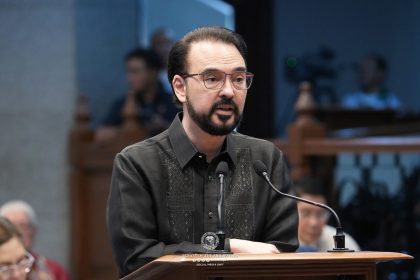
That is why Senate President Pro Tempore Vicente “Tito” Sotto III’s proposal for clearer rules on prolonged unauthorized absences deserves serious attention.
Sotto has filed Senate Resolution No. 751, asking the Senate to study and institutionalize guidelines for members who remain absent without authorization for extended periods. He identified what he called a policy gap in the current rules and argued that prolonged absenteeism can prevent senators from performing major legislative functions.
The timing makes the issue impossible to separate from the impeachment proceedings.
Four senators are currently absent for different reasons. Their nonparticipation has become central to the dispute over the conviction threshold.
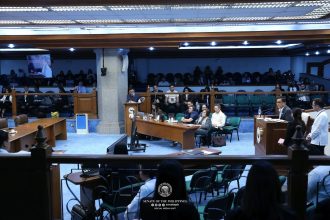
The Senate impeachment court ruled in September that only senators legally and factually able to participate should be included in determining the two-thirds threshold. With four senators absent, that interpretation could reduce the number required for conviction from 16 to 14.
Senators Robin Padilla and Bong Go have challenged that interpretation before the Supreme Court.
Their argument relies on the Constitution’s wording. Article XI states that no impeached official may be convicted without the concurrence of two-thirds of all members of the Senate. The petitioners argue that all 24 Senate seats remain occupied and that attendance cannot change the denominator written into the Constitution.
That argument must be taken seriously.
The Constitution does not say two-thirds of those present. It does not say two-thirds of those voting. It says two-thirds of all members. The Senate impeachment court has taken a different view, reasoning that senators who are legally or factually unable to participate should not determine the threshold. The Office of the Solicitor General has asked the Supreme Court to dismiss the challenge as premature and without merit.
Until the Court rules, neither side should pretend the constitutional question has been settled. But the attendance problem exists regardless of which interpretation ultimately prevails.
If the threshold is fixed at 16 under all circumstances, prolonged absences can make conviction mathematically harder even when absent senators never cast a vote. If the threshold falls with the number of senators able to participate, absences can reduce the number required for conviction.
Either way, nonparticipation can shape the result.
That is the institutional weakness the Senate should address. An impeachment trial is not an ordinary legislative session. Senators sit as judges under oath or affirmation and exercise the Senate’s exclusive constitutional power to try and decide impeachment cases. Their participation therefore carries consequences beyond ordinary attendance statistics.
A senator who votes to convict or acquit is publicly accountable for that decision. A senator who is absent may also affect the outcome, but without casting a vote that can be examined and judged by the public. That should concern both supporters and opponents of the Vice President.
Clear attendance rules should not be designed to help the prosecution or the defense. They should apply neutrally, prospectively and consistently to all senators.
There must also be room for legitimate absence. Medical conditions, legal restrictions and other serious circumstances cannot simply be treated as misconduct. But there is a difference between a justified inability to attend and an unexplained or unauthorized refusal to perform official duties.
The Constitution already recognizes the Senate’s authority in this area. It provides that a smaller number of members may compel the attendance of absent senators under penalties the chamber itself may establish. It also allows each House of Congress to determine its own rules and discipline its members.
Sotto’s proposal therefore raises a question the Senate has both the authority and responsibility to answer.
The rules should establish what constitutes authorized absence, what documentation is required, when prolonged absence triggers review, and what proportionate sanctions may follow. Those rules should be known before future disputes arise, not improvised when the political stakes are highest.
They should also apply beyond impeachment.
Senators are elected to legislate, conduct oversight, vote on appointments and treaties, and represent the public in proceedings that can have national consequences. Extended unexplained absence weakens all of those functions.
The current impeachment dispute simply makes the problem impossible to overlook. The Supreme Court should resolve the constitutional question of whether the conviction threshold is 14, 16, or must be determined under some other legally defensible standard.
The Senate, however, should not wait for that ruling to confront its own institutional gap.
Whatever number the Court ultimately sets, the principle should be straightforward: an impeachment outcome should be determined by senators who openly participate in the constitutional process, not by uncertainty over who has chosen not to show up.