
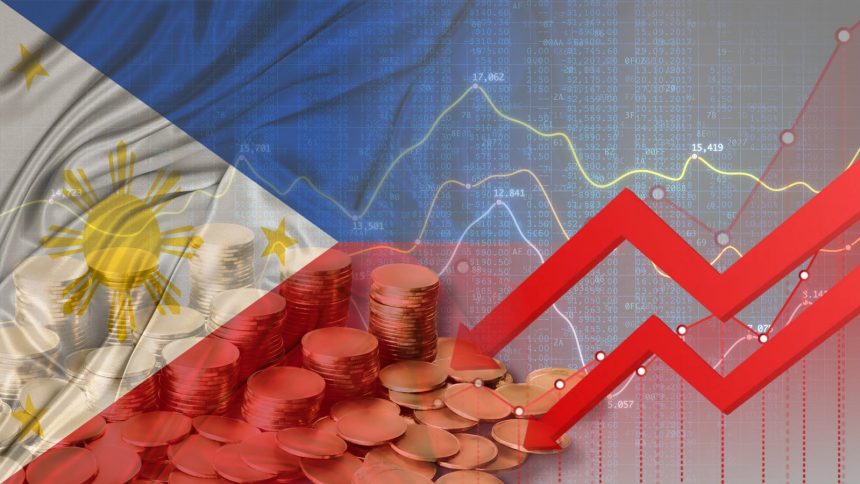
Two of the Philippines’ leading business executives have warned of worsening economic conditions, with PLDT Chairman Manuel V. Pangilinan describing the current business environment as the toughest of his career and Ayala Corp. Chairman Jaime Augusto Zobel de Ayala suggesting that a recovery may not come until late 2027.
Pangilinan said geopolitical tensions, rapid technological changes and weakening domestic demand have created greater challenges for businesses than the COVID-19 pandemic.
“There are so many cross-currents that are descending upon us concurrently,” Pangilinan told reporters on, citing the conflict in the Middle East, tensions in the West Philippine Sea and uncertainty surrounding artificial intelligence.
Zobel, speaking at the ASEAN Inclusive Growth Summit on November 11, warned that high food and energy prices, together with rising interest rates, could delay an economic rebound.
Asked when conditions might improve, he said:
Well, maybe, you know, being a little optimistic, maybe towards the end of 2027. 2027 will have its challenges.
Their warnings follow a slowdown in Philippine gross domestic product growth to 2.1% in the third quarter, while inflation climbed to 7.8% in October. Rice prices increased 20.7% from a year earlier.
The Bangko Sentral ng Pilipinas raised its benchmark interest rate by 50 basis points to 5.5% on October 22 to contain inflation. Higher borrowing costs are also affecting demand for residential property, according to Zobel, who said prospective homebuyers may hesitate to take out mortgages.
Ayala Land reported ₱20.5 billion in residential reservation sales during the third quarter, compared with ₱32.7 billion a year earlier. Ayala Corp.’s core net income declined 6% to ₱34.5 billion in the first nine months of 2026.
Pangilinan’s PLDT also reported an 8% decline in nine-month net income to ₱21.67 billion, reflecting competitive pressures, higher depreciation costs and weaker economic conditions.
Despite the slowdown, Zobel said some consumption-driven sectors could continue expanding while others face weaker demand.