

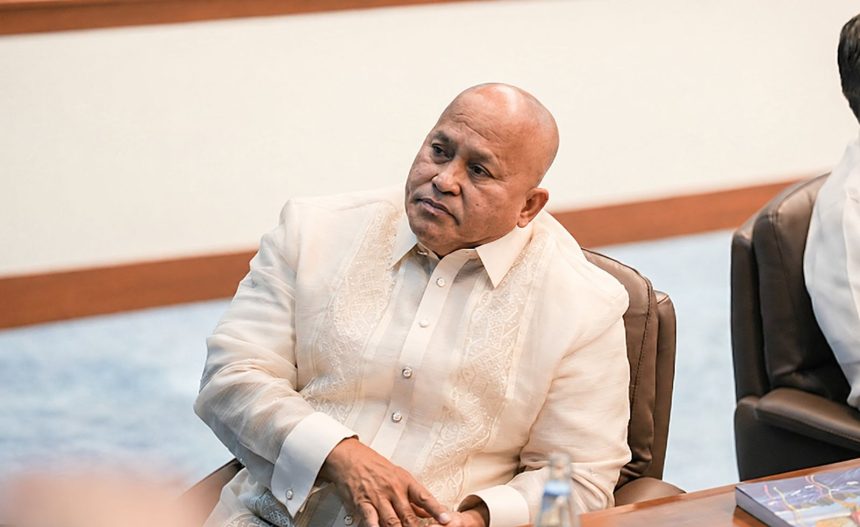
The announcement of a ₱50-million reward connected to Senator Ronald dela Rosa’s arrest demands a serious public explanation. It concerns the enforcement of an arrest warrant against a powerful officeholder, the safety of those involved and the boundaries of state action. The size of the reward ensures attention. The government’s task is to show that the operation deserves public confidence.
On October 23, Interior Secretary Jonvic Remulla announced the reward as authorities intensified efforts to locate Dela Rosa, who faces an International Criminal Court arrest warrant. Reports described the offer as a reward for information leading to his capture. The allegations underlying the warrant remain allegations to be determined through the appropriate proceedings.
Our starting point is that elected office should provide no shelter from lawful accountability. A senator’s political following cannot settle the status of an arrest warrant. Dela Rosa’s prominence makes it particularly important that institutions explain and carry out their responsibilities. The public should be able to see that authority is exercised through a process that applies to powerful people as well as everyone else.
That principle, however, does not remove the need to scrutinise the government’s methods. A reward of this scale can influence behaviour well beyond the police operation. It may encourage people with useful information to come forward. It may also attract inaccurate claims, personal vendettas or individuals willing to take dangerous risks in pursuit of money.
The government should therefore state the reward’s purpose with precision. People need to understand what information qualifies, who is responsible for receiving it and how its reliability will be assessed. The announcement should leave no room for an interpretation that private violence, intimidation or reckless confrontation would be rewarded.
Public safety must guide the operation. Officials should explain how they intend to protect nearby communities, witnesses and personnel while seeking a lawful arrest. Operational details may need protection, but the governing principles can be stated openly. The public deserves reassurance grounded in safeguards rather than language that turns a serious enforcement task into a spectacle.
The reward’s financial administration also warrants scrutiny. Government should identify the responsible authority, explain the basis for the arrangement and provide an appropriate account of any payment once disclosure is possible. These are reasonable questions about public responsibility. Asking them does not diminish the seriousness of the allegations or the importance of enforcing the warrant.
The prospect of unreliable information requires particular attention. A reward can generate tips whose quality varies considerably. Verification must remain an institutional duty, and allegations supplied by an informant should be tested carefully. Officials should avoid publicising accusations prematurely, especially where doing so could expose unrelated people to suspicion or harm.
Dela Rosa’s rights remain important throughout. His arrest, if carried out, would be a procedural step rather than a judgment of guilt. The allegations against him require adjudication. The government’s communications should preserve that distinction, even while explaining the urgency of its operation. A credible justice process should be strong enough to maintain these boundaries under political pressure.
There is also a responsibility on Dela Rosa and those speaking for him. Political disagreement with the government cannot by itself answer the institutional questions raised by a warrant. Any challenge should be explained through its legal basis and addressed within the relevant procedures. Public statements should help clarify the issues rather than encourage the belief that political loyalty can settle them.
The history of the allegations makes this moment especially consequential. Dela Rosa’s connection to the Duterte administration’s anti-drug campaign places the case within a wider debate about the use of state power. That debate reinforces the need for an operation governed by clear limits. Government should demonstrate the accountable conduct that the justice process is intended to uphold.
It would be equally mistaken to judge the reward entirely through party affiliation. A standard accepted because it affects a political opponent may later be applied elsewhere. The proper test is whether the arrangement has a clear purpose, adequate safeguards and responsible oversight. Those expectations should remain the same whoever occupies the Senate seat or directs the department.
Success should therefore be measured by a safe, lawful process and the reliable handling of information. Dramatic statements and constant publicity cannot establish those qualities. Careful administration can. The government should be prepared to explain how it will prevent abuse and how the public can distinguish an authorised operation from a dangerous private initiative.
The ₱50-million offer could assist accountability if it produces reliable information within a disciplined process. It could create a troubling precedent if spectacle or political hostility overwhelms that process. Dela Rosa should face the scrutiny required by the warrant, and the government should face scrutiny of its own methods. Justice will be strengthened when both responsibilities are taken seriously.