
The Philippines’ balance-of-payments deficit widened to $10.6 billion in the first 10 months of 2026, already exceeding the Bangko Sentral ng Pilipinas’ full-year forecast as costly imports and foreign investment outflows continued to pressure the country’s external accounts.
The shortfall was more than double the $4.6 billion deficit recorded from January to October 2025 and surpassed the BSP’s $9.2 billion deficit projection for all of 2026.
In October alone, the Philippines recorded a deficit of nearly $1.5 billion, reversing a $706 million surplus in the same month last year. Official BSP data confirm the October deficit at $1.499 billion.
The central bank attributed the wider year-to-date gap mainly to the continuing goods trade deficit and net foreign portfolio investment outflows. Higher oil prices have increased the cost of imports, while global uncertainty and geopolitical tensions have contributed to investors moving funds out of emerging markets.
The country’s gross international reserves fell to about $98 billion in October, their lowest level in nearly four years. The reserves were still sufficient to cover about 6.1 months of imports, providing a substantial buffer against external shocks.
UnionBank chief economist Ruben Carlo Asuncion said the breach of the BSP’s full-year projection could prompt the central bank to revise its outlook, but added that it did not yet indicate an external stability problem because reserve levels remain adequate.
The BOP will likely remain under pressure from the trade deficit and volatile capital flows, partly cushioned by remittances and services receipts, Asuncion said.
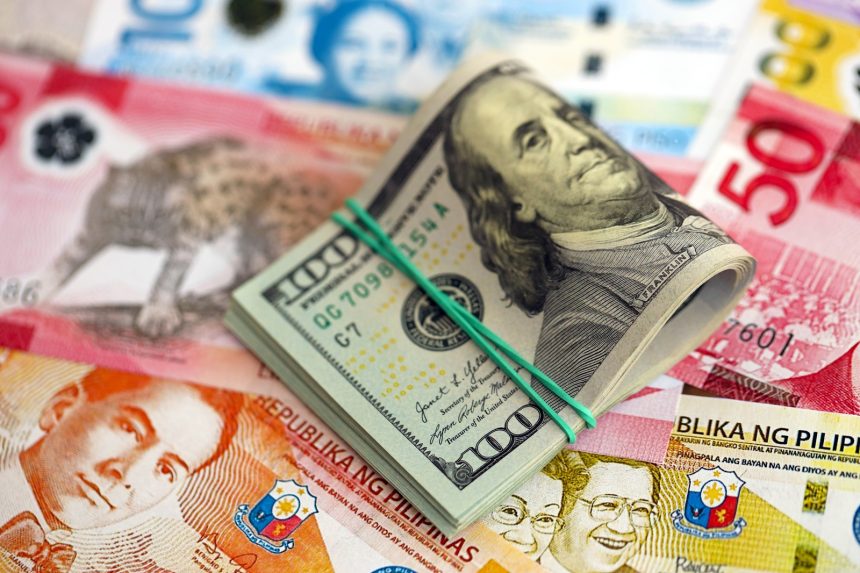
The weaker external position adds to pressure on the peso, which recently fell past ₱64 to the US dollar before recovering. The BSP has said it intervenes in the foreign exchange market when necessary to smooth excessive volatility rather than defend a specific exchange rate.