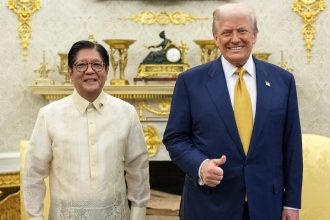

President Ferdinand Marcos Jr. has clarified that the Philippines is seeking to diversify its food and energy suppliers, after US President Donald Trump claimed Manila had agreed to source 100% of its agricultural and energy requirements from the United States starting January 1.
Marcos said the purpose of the emerging trade arrangement is to give the Philippines more supply options rather than depend on a single country.
If you are standing on one foot, relying on only one source, you can easily run into problems. If you have several sources, even if one has a problem, you can turn to the others.
He said the United States had opened additional opportunities for Philippine purchases of agricultural products and energy that the country had previously sourced elsewhere. Marcos cited soybeans and wheat as examples of potential US agricultural imports, particularly as the Philippines looks for alternative supplies amid disruptions linked to the Russia-Ukraine war.
The President said specific purchases and volumes have not yet been finalized and that Cabinet officials are still working on the details.
Energy Secretary Sharon Garin separately confirmed that negotiations on US energy imports remain ongoing and said the Philippines would pursue arrangements that benefit Filipino consumers.
Trump had earlier said the Philippines would buy “100%” of its agricultural products from American farmers beginning January 1 and shift all its energy purchases to the United States.
However, the Philippine government has not confirmed such an exclusive commitment. Marcos has consistently described the talks as an effort to broaden the country’s sources of food and energy, while Ambassador Jose Manuel Romualdez has said the specific terms have yet to be finalized.
The official US account of the trade discussions has also referred to increased Philippine imports of American agricultural and energy products rather than a requirement to source all supplies from the United States.