
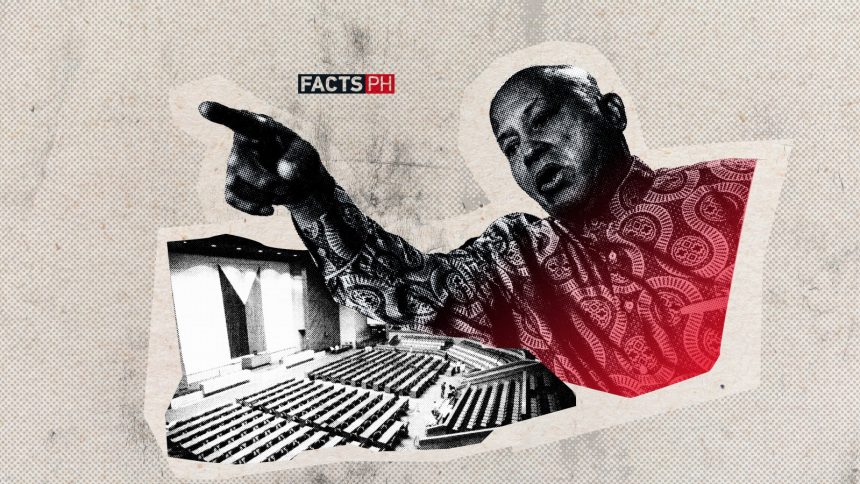
Sen. Ronald “Bato” dela Rosa’s prolonged absence has moved beyond a question of attendance. It is becoming a test of how the Senate defines responsibility when one of its elected members remains in office while staying away from the institution he was elected to serve.
Dela Rosa is officially listed by the International Criminal Court as at large. The ICC issued a secret arrest warrant against him on Nov. 6, 2025 and made it public on May 11, 2026. He is accused of involvement in an alleged crime against humanity of murder during the Duterte administration’s drug war.
Those allegations have not been proven at trial. An arrest warrant is not a conviction, and Dela Rosa is entitled to contest the case against him. But the ICC case does not resolve a separate question inside the Philippine Senate: what obligations remain when an elected senator chooses not to appear because he fears arrest?
The Senate Committee on Ethics and Privileges is now considering a complaint over Dela Rosa’s prolonged absence. The committee has already found the complaint substantially sufficient in form and substance, although that decision is not a finding that he committed an ethics violation.
Dela Rosa has asked for the complaint to be dismissed.
No rule of the Senate has been identified as having been violated, he argued in his response.
His lawyer Israelito Torreon has also said Dela Rosa has not abandoned his position because his office remains open, staffed and working. According to Torreon, the senator is avoiding personal appearances because of the risk that he could be arrested and transferred to the ICC.
That defense identifies a real weakness in the Senate’s existing rules.
The chamber has no clear rule specifically prescribing what happens when a senator is absent for an extended period without ordinary leave. Senate President Pro Tempore Vicente Sotto III has proposed changing the rules precisely because of that gap.
The Constitution, however, gives each chamber authority to compel the attendance of absent members and to discipline its own members. The question before the Senate is therefore broader than whether the current rulebook contains a provision written specifically for Dela Rosa’s situation.
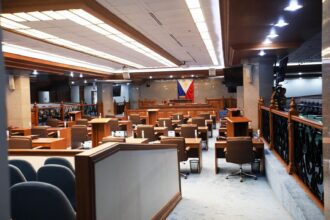
A Senate seat is not simply an office with employees who can continue processing constituent concerns. Senators personally debate legislation, question officials, participate in committees and vote on measures involving trillions of pesos in public money.
Staff can keep an office functioning. They cannot cast a senator’s vote.
There is also an important financial distinction. Senate President Sherwin Gatchalian said in October that Dela Rosa was no longer receiving his salary or his office’s maintenance and operating funds because required documents could not be personally signed. That addresses part of the concern over public money, but not the larger issue of representation.
Dela Rosa himself acknowledged in his ethics response that the duty of a senator to be present should not be taken lightly. His argument is that discipline must rest on an existing rule and concrete evidence rather than public anger or media reports.
That principle matters. Rules should not be invented retroactively simply to punish an unpopular or politically controversial member. But the opposite principle matters too: a gap in Senate rules should not become a permanent exemption from accountability.
The Senate now has two responsibilities. It must decide Dela Rosa’s complaint fairly under the rules that currently exist, while separately establishing clear standards for prolonged absences that will apply to any senator in the future.
The standard should not depend on whether the absent senator belongs to the government, the opposition or any political faction.
Dela Rosa’s criminal liability belongs to the courts. The Senate’s responsibility is different. It must decide what meaningful representation requires from someone who continues to hold one of only 24 seats in the chamber.
Whatever decision it reaches will extend beyond one senator. It will define how much personal accountability the Senate expects from its own members when an elected official remains in office but cannot, or will not, regularly appear to perform it.