

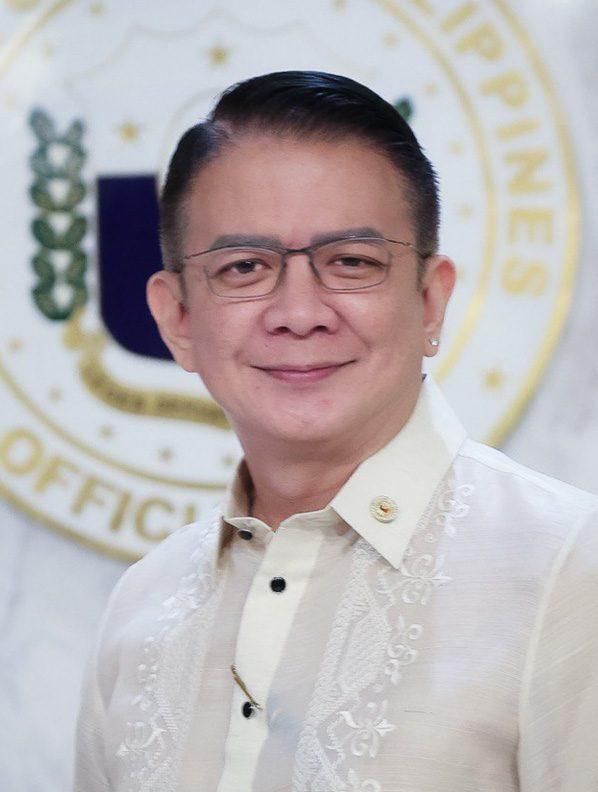
Francis Escudero, the presiding officer of the Senate impeachment court, says he would refuse the vice presidency if Sara Duterte is convicted and removed. The pledge answers speculation that he could benefit from the verdict he helps deliver. It also exposes a gap: Philippine law offers no formal safeguard against exactly that kind of conflict.
What Escudero said
Speaking on his podcast on Sunday, October 25, Escudero said no offer has been made to him. He said accepting the post after sitting in judgment would be improper. “I will not accept it because of a simple reason. Conflict of interest,” he said.
He described the trial as fair and said he has not reached a decision. He explained that the court may sometimes appear stricter with the prosecution because the burden of proof rests on that side. He also urged fellow senator-judges to decide on the evidence rather than public surveys, noting that the public has so far heard only the prosecution’s case.
How a vacancy would be filled
The speculation has a constitutional basis. Under Article VII, Section 9 of the Constitution, when the vice presidency falls vacant the President nominates a replacement from among the members of the Senate and the House of Representatives. The nominee takes office once confirmed by a majority of all members of both chambers, voting separately.
The provision has been used once, in 2001, when President Gloria Macapagal Arroyo nominated Sen. Teofisto Guingona Jr. after she rose from the vice presidency to the presidency.
The mechanism means every sitting senator, including every senator-judge in this trial, is technically eligible for the post a conviction would open. Escudero is a natural subject of speculation: he ran for vice president in 2016 and has held senior Senate leadership roles. Critics and analysts have publicly floated his name. None has presented evidence that any offer was discussed.
A pledge, not a rule
Escudero’s statement is a voluntary commitment. Nothing in the Constitution or the Senate’s impeachment rules bars a senator-judge from later accepting a presidential nomination to the vice presidency. Senator-judges also do not face the formal disqualification rules that apply to ordinary judges with a personal stake in a case.
That makes the pledge politically meaningful but legally unenforceable. Its weight rests on the public record. If Escudero, or any other senator-judge, were later nominated after a conviction, his words on October 25 would be the measure.
The broader issue reaches beyond one senator. In an impeachment, judges are elected politicians with allies, rivals and ambitions. The same chamber that tries the case would also vote to confirm any replacement. The Constitution accepts this overlap by design, relying on political accountability rather than recusal. Escudero’s disclosure is one way to manage it. Whether others make similar commitments is an open question.
Surveys and the burden of proof
Escudero’s remark about surveys also deserves attention. Public opinion polls measure reactions to a case that, so far, has been presented by only one side. The defence begins presenting evidence on November 9. A senator-judge who votes according to surveys taken before the defence has spoken would be judging an incomplete record.
His point about the burden of proof is accurate as a general principle: the side bringing a charge must prove it. What standard of proof applies in a Philippine impeachment has never been fixed by statute, and senator-judges have historically applied their own.
What to watch
Three things will test the pledge: whether any other senator-judge addresses the vacancy question, whether Malacañang comments on succession, and, if there is a conviction, who is nominated and how Escudero votes on confirmation.
No verdict has been reached. Duterte has denied the allegations against her.