

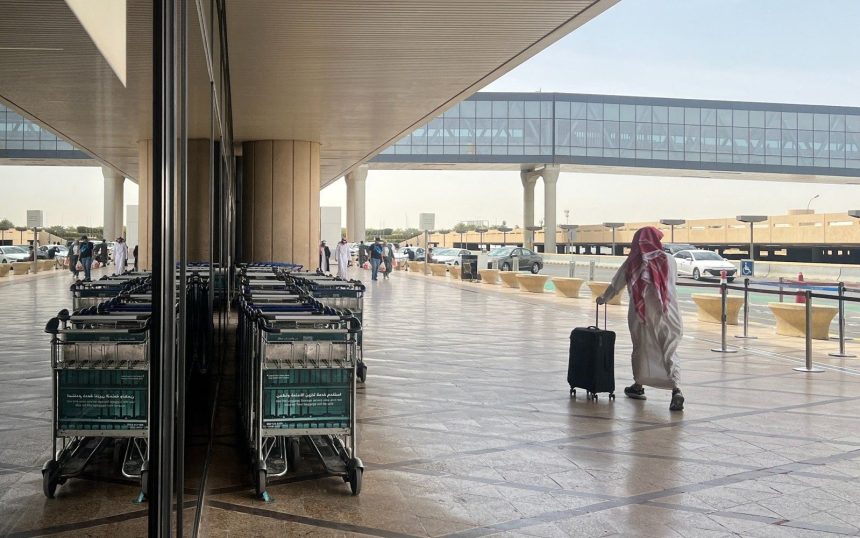
Explosions were heard in Saudi Arabia’s capital, Riyadh, on October 25, as the country partially resumed operations at King Khalid International Airport following a two-week closure caused by attacks by Yemen’s Houthi rebels. Saudi air defences said they had intercepted ballistic missiles and drones, while the Houthi group warned that the airport remained a military target.
The airport announced that some flights would resume on Sunday, with Terminal 1 serving domestic traffic and Terminal 2 handling international flights operated by Saudi carriers. However, flight-tracking data from Flightradar24 indicated limited activity, raising questions about the extent of the airport’s operational recovery. The airport had been closed following an attack on October 10 that killed 13 people and injured more than 300.
An Agence France-Presse journalist in Riyadh reported hearing three explosions in the early hours of Sunday, as residents received alerts warning of an aerial threat and instructing them to seek shelter. The Saudi-led military coalition said it had intercepted a ballistic missile targeting Riyadh and two drones in the wider capital area. Later, another cruise missile targeting the southern city of Khamis Mushait was reportedly intercepted.
Houthi military spokesman Yahya Saree warned airlines, airport staff and passengers against using the facility, claiming it remained a military target. The group said it had targeted three Saudi airports, energy facilities, an oil pipeline and a military base within 24 hours, although these claims were not independently verified in full.
On October 26, the Houthis said they had again targeted Saudi oil pumping stations and Riyadh airport. Saudi authorities had not immediately confirmed the latest claims, while the coalition reported intercepting a missile aimed at the capital. The escalation has heightened concerns over the security of civilian infrastructure and regional oil supplies.